

The suspicion that online casino games might be rigged is one of the most persistent beliefs among players, fueled by losing streaks that feel statistically impossible, near-miss outcomes that seem too frequent to be random, and the fundamental challenge of trusting invisible software to generate fair results. Unlike physical casinos, where you can observe dealers shuffling cards or watch roulette wheels spin, online games operate through algorithms hidden behind screens, creating a trust barrier that’s difficult to overcome even when games are genuinely fair. Understanding how Random Number Generator (RNG) technology actually works—what it does, how it’s tested, and why it’s designed the way it is—helps Canadian players distinguish between legitimate randomness that occasionally produces frustrating results and actual manipulation that would constitute rigging.
Why Canadian Players Suspect Games Are Rigged More Often Than They Think
Ask any group of casino players about their biggest concern, and “rigged games” consistently tops the list. This suspicion isn’t entirely unreasonable—after all, you’re playing games where the house mathematically has an edge, outcomes happen instantly on a screen with no physical components to observe, and losing streaks can feel too consistent to be coincidental. For Canadian players accessing both provincially-regulated platforms and international casinos, the question of whether games are truly random or secretly manipulated becomes even more pressing.
The Psychology Behind Rigging Suspicions
The suspicion intensifies during losing streaks. When you’ve hit fifteen losses in a row at blackjack, or watched a slot machine take fifty spins without a significant win, the natural human response is to look for patterns and assign blame. “The casino must have rigged this against me” feels more satisfying than “I’m experiencing normal variance in a game with a house edge.” This cognitive bias—our tendency to see patterns in randomness and attribute intention to bad luck—means players often suspect manipulation even when games are operating exactly as designed.
The Reality of RNG Technology
The reality is more nuanced than either “all games are rigged” or “all games are perfectly fair.” The outcome randomness in legitimate casino games is genuinely unpredictable, governed by technology called Random Number Generators that produce results no human or casino can predict or control. However, not all casinos implement this technology properly, not all are tested by independent authorities, and understanding the difference between legitimate randomness and actual manipulation requires knowing what to look for. For Canadian players navigating a market that includes both tightly-regulated provincial options and international platforms with varying oversight, this knowledge becomes particularly important.
Canadian Market-Specific Fairness Considerations
Canadian market-specific factors that amplify these concerns include the split between tightly-regulated provincial platforms like BCLC’s PlayNow or Ontario’s licensed operators versus international casinos that may operate with less stringent oversight. When provincial platforms publish detailed payout reports and undergo regular audits, while some international sites provide minimal transparency, the contrast naturally raises questions about whether all platforms operate with equal fairness. Additionally, Canadian players often encounter currency conversion, payment processing differences, and withdrawal timeframes that vary dramatically between platforms, creating frustration that can manifest as suspicion about game fairness even when the two issues are unrelated.
The Consequences of Misunderstanding RNG
The real consequences of misunderstanding RNG extend beyond mere suspicion. Players who believe games are rigged might chase losses, thinking the casino “owes them” a win, switch between games or casinos, believing they’re finding “looser” options when they’re actually just experiencing normal variance, or avoid legitimate casinos while playing at truly sketchy operations because they can’t distinguish between the two. Understanding how RNG actually works helps players make informed decisions about where to play and what to expect, rather than operating on suspicion and superstition.
What RNG Actually Is and How It Functions
Random Number Generator technology sits at the core of every digital casino game, determining outcomes for slots, video poker, digital roulette, and any other game without physical components. Understanding what RNG is—and what it isn’t—clears up most misconceptions about game fairness.
The Basic Mechanism
RNG is a computer algorithm that generates sequences of numbers with no discernible pattern. When you click “spin” on a slot machine or “deal” in video poker, the RNG has already determined the outcome in that instant by generating a random number that corresponds to a specific game result. The spinning reels or dealing animation you watch is purely visual—the result was decided the millisecond you clicked, not when the reels stop spinning, or cards finish dealing.
The algorithm uses a “seed number” as its starting point, then applies complex mathematical formulas to generate the next number in the sequence. Each number generated becomes the seed for the next calculation, creating an essentially infinite chain of unpredictable results. Modern RNG algorithms generate thousands of numbers per second even when no one is playing, meaning the exact microsecond you click determines which number in that constantly-running sequence becomes your result.
Why True Randomness Matters
True randomness means outcomes are entirely independent—what happened on the previous spin, hand, or roll has zero influence on what happens next. This independence is what most players intuitively struggle with. After ten losses in a row, it feels like a win is “due,” but the RNG doesn’t track previous results or adjust future outcomes to create balance. Each event is isolated, with the same probability regardless of history.
This creates situations that feel suspicious but are statistically normal. You might see the same slot symbol three times in five spins, experience ten straight losses at blackjack despite playing perfect strategy, or watch the roulette ball land on red eight consecutive times. These clusters and streaks are exactly what random distribution produces—true randomness looks clumpy and irregular, not evenly distributed as our brains expect.
How RNG Systems Are Tested and Certified
The difference between legitimate RNG implementation and potential rigging lies in independent testing and certification. Reputable casinos don’t just claim their games are fair—they submit their RNG systems to third-party laboratories that verify the technology works as it should.
Independent Testing Laboratories
Organisations like eCOGRA, iTech Labs, GLI (Gaming Laboratories International), and TST (Technical Systems Testing) specialise in auditing online casino RNG systems. These labs test that the RNG algorithm produces genuinely unpredictable results, that the distribution of outcomes matches mathematical probability over millions of trials, that the game’s stated Return to Player (RTP) percentage is accurate, and that there’s no way for the casino or any external party to predict or manipulate results.
The testing process involves running millions of game rounds and analysing the statistical distribution of results. If a slot claims a 96% RTP, the testing lab will simulate millions of spins and verify that over the long term, the game returns approximately 96% of wagered money to players. They also verify that short-term variance falls within expected ranges—occasional long losing streaks should occur at frequencies that match probability models.
Certification Seals and What They Mean
Legitimate casinos display certification seals from these testing agencies, usually in the footer of their websites. Clicking these seals should take you to the testing agency’s website, where you can verify that the certification is real and current. Fake seals are common—sketchy casinos will display eCOGRA or iTech Labs logos without actual certification, knowing most players won’t verify. Always click through to confirm the casino is listed in the testing agency’s current client database.
Provincial regulators like the Alcohol and Gaming Commission of Ontario (AGCO) require RNG certification as a licensing condition. International casinos licensed by authorities like the Malta Gaming Authority or UK Gambling Commission face similar requirements. Unlicensed casinos or those licensed by jurisdictions with minimal oversight may not undergo independent RNG testing, creating a genuine fairness risk.
Red Flags That Suggest Actual Manipulation
While most licensed casinos implement RNG fairly, some operations do manipulate outcomes or use flawed RNG systems that aren’t truly random. Recognising red flags helps you avoid platforms where rigging is a legitimate concern rather than paranoia.
No Visible Licensing or Certification
Casinos that don’t display licensing information or RNG certification seals are the primary risk. If a platform can’t or won’t tell you which jurisdiction licenses it or which testing agency certified its games, that opacity suggests they’re not operating under regulatory oversight that mandates fair RNG implementation. Canadian players navigating both provincially-regulated and international casino options need reliable resources to evaluate platform legitimacy. Casino Atlas’ independent casino evaluations for Canada examine RNG certification, licensing compliance, and security standards to help Canadian players distinguish between legitimate platforms and those cutting corners on fairness, providing third-party verification of which casinos implement proper randomisation and which ones raise red flags.
Outdated or Fake Certification Claims
Some casinos display certification seals that link to dead pages, show certifications from years ago without renewal dates, or use logos from legitimate testing agencies without actual certification. Verify any certification claim by visiting the testing agency’s website directly and searching for the casino in their client database. If the casino isn’t listed or the certification has expired, the seal is fake.
Games From Unknown or Unverifiable Software Providers
Reputable game developers like NetEnt, Microgaming, Playtech, and Evolution Gaming build RNG certification into their game development process. When a casino offers games from recognisable providers, you’re inheriting those providers’ RNG testing and reputation. Casinos using games from unknown developers with no web presence or industry history create risk—you can’t verify whether those games underwent any RNG testing at all.
Impossible-Seeming Payout Reports
Some casinos publish payout percentages that don’t align with the mathematical reality of the games they offer. If a casino claims 98% average RTP across all games when standard slots run 94-96% and table games vary widely, the numbers don’t add up. While high RTP isn’t impossible, claims that significantly exceed industry norms without explanation warrant scepticism.
What “House Edge” Means Versus Rigging
A critical distinction that eliminates most rigging suspicions is understanding that casinos don’t need to rig games to profit—the house edge built into game rules already guarantees the casino wins long-term.
How House Edge Works
Every casino game has a mathematical advantage for the house built into its rules and payout structure. In roulette, betting on red or black pays 1:1, but there are 18 red, 18 black, and 2 green numbers (0 and 00 on American wheels), meaning you have an 18/38 (47.4%) chance of winning a bet that pays even money. This 2.6% difference is the house edge—over thousands of spins, the casino expects to keep about 2.6% of all money wagered.
Slots work similarly. A game with 96% RTP has a 4% house edge—for every $100 wagered, the game is programmed to return $96 to players over the long term, with the casino keeping $4. Individual sessions vary wildly—you might turn $100 into $300 or lose it all in minutes—but over millions of spins across all players, the math averages out to that 96% return.
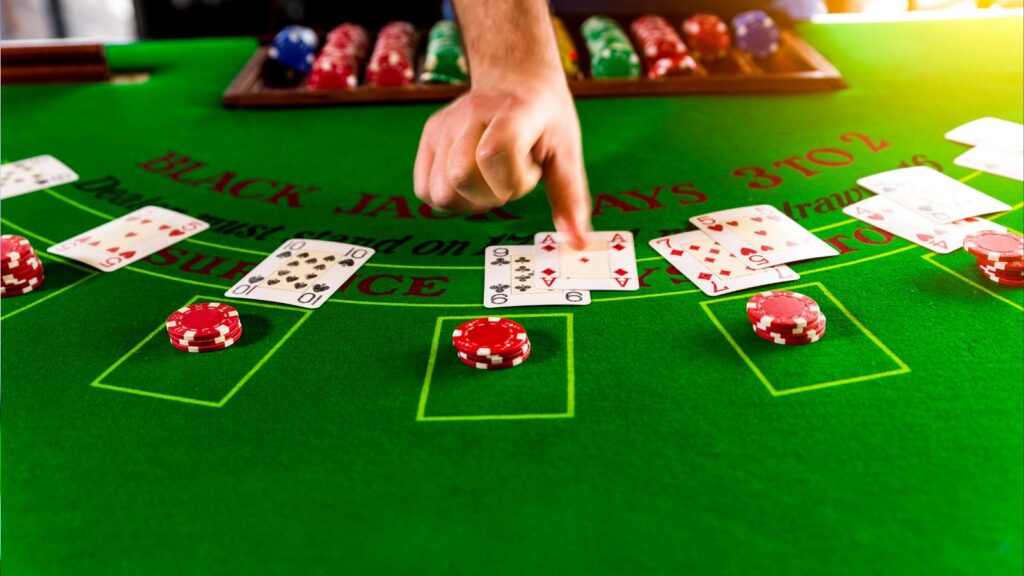
Why Rigging Is Unnecessary and Counterproductive
Casinos operating legitimate RNG systems already profit from the house edge without manipulation. Rigging games to pay out less than the stated RTP would:
- Violate licensing requirements and risk regulatory penalties
- Destroy reputation if discovered, ending the business entirely
- Create legal liability for fraud
- Undermine the entire mathematical foundation that makes casino gambling profitable long-term
For regulated casinos, rigging is high-risk with no reward—they make reliable profits from fair games by accepting that some players win while the majority lose over time. The business model depends on volume and house edge, not on manipulating individual outcomes.
When Suspicion Is Justified Versus When It’s Variance
Learning to distinguish between normal variance in fair games and genuine manipulation requires understanding what a random distribution actually looks like.
Normal Variance Patterns
In fair games, you should expect to see:
- Losing streaks of 10-15 rounds (or more) occurring occasionally
- Clustered outcomes where similar results happen in groups
- Long periods without hitting bonus features in slots (100+ spins)
- Winning sessions followed immediately by losing sessions, with no pattern
- Near-misses where you come close to winning but don’t (this is also programmed randomness, not manipulation)
These patterns feel suspicious but are statistically normal. Randomness produces irregularity, not even distribution. The human brain evolved to detect patterns as a survival mechanism, which means we see intentional design in what’s actually mathematical chaos. When you experience three losses in a row, your pattern-recognition instinct screams “something’s wrong,” even though three consecutive losses at a game with 48% win probability should occur roughly 14% of the time—meaning once every seven or eight short sessions.
The challenge intensifies because we remember unusual patterns more vividly than normal ones. You’ll forget the session where results felt random and unremarkable, but you’ll remember the time you hit the same losing outcome five spins in a row. This memory bias creates the impression that suspicious patterns happen constantly when they actually occur at statistically predictable frequencies. How agencies’ RNG verification systems validate game fairness demonstrates that true random number generation creates outcome clustering and apparent patterns that human perception interprets as non-random, even though mathematical analysis confirms the results match expected probability distributions perfectly. The verification process specifically tests for these seemingly impossible streaks because their presence at statistically appropriate frequencies actually proves randomness rather than contradicting it.
Red Flags That Warrant Investigation
Actual manipulation or flawed RNG might show:
- Consistent inability to trigger bonus features that should occur at specific statistical frequencies
- Payout percentages that don’t align with stated RTP over very large sample sizes (thousands of spins/hands)
- Games that behave differently after deposits versus after withdrawals
- Results that change based on bet size in ways that don’t align with game rules
- Technical glitches that always resolve against the player
Even these signs aren’t proof—variance can create extreme patterns. But if you’re experiencing consistent issues at a specific casino that you don’t encounter at others, the problem might be the platform rather than bad luck.
How Canadian Players Can Verify Game Fairness
Practical steps protect you from both actual rigging and unnecessary suspicion about fair games.
Stick to Licensed and Certified Casinos
Play at provincially-licensed operators (BCLC, OLG, Loto-Québec, SLGA) or international casinos licensed by reputable jurisdictions (UK, Malta, Gibraltar) that require independent RNG testing. These platforms face regulatory audits, publish payout reports, and operate under legal frameworks that make rigging financially and legally catastrophic.
Verify Certifications Yourself
Don’t trust certification seals at face value—click through to the testing agency’s website and confirm the casino is currently listed. Check that certifications are recent (within the past year) and cover the specific games you play. Provincial platforms publish detailed compliance reports; international casinos should, at a minimum, provide verifiable testing agency certifications.
Understand the Math of Your Games
Learn the house edge and expected variance of games you play. If you’re playing slots with 4% house edge, expecting to break even long-term isn’t realistic—you should expect to lose about 4% of total money wagered over time. Understanding this math helps distinguish between “I’m losing because the casino has an edge” and “I’m losing because something is wrong.”
Track Your Results Over Meaningful Sample Sizes
If you suspect a specific game is unfair, track results over hundreds or thousands of rounds. Ten losing hands doesn’t indicate anything; 1,000 hands producing results that dramatically deviate from expected probability might. Many casinos offer game history features that allow you to review past results and calculate the actual RTP over your play sessions.
The question “Are online casino games rigged?” has no single answer. Games at licensed, certified casinos operating under regulatory oversight with verified RNG systems are genuinely random and fair within their stated rules and house edge. Games on unlicensed platforms using unverified software from unknown developers carry a real risk of manipulation. The challenge for Canadian players is developing the knowledge to distinguish between the two, rather than operating on suspicion that treats all casinos as equally questionable or equally trustworthy. Understanding RNG technology, verification systems, and the mathematics underlying casino games transforms you from a suspicious player into an informed one capable of making rational decisions about where to play and what results to expect.
More Stories
Aerobet Online Casino – Complete Platform Guide
Why Players Are Choosing 96ACE Online Casino Malaysia: Four Timing Strategies Most Guides Ignore
Why Gamification Software Is the Trend in Online Casinos