
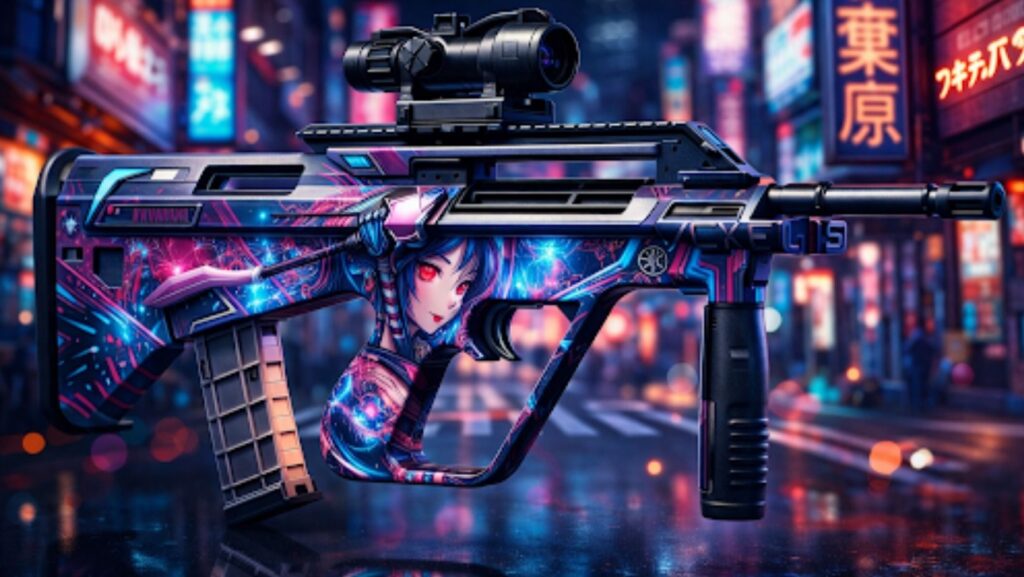
Look, let’s just get it out there. The standard-issue arsenal in CS2 and CSGO is, for lack of a better word, boring. It’s a sea of tactical pea soup—functional, sure, but completely devoid of personality. For the longest time, the CSGO market pretty much followed suit. We got a thousand shades of camo, gritty battle-scarred finishes, and designs that looked like they were scraped off the floor of a surplus store. And then, slowly at first, things started to get weird. And awesome. Splashes of hot pink, in-your-face cartoons, and designs that looked more at home on a skateboard deck than an assault rifle began popping up. This wasn’t just a trend; it was the birth of a whole new religion for a certain kind of collector. While the mainstream is chasing the same old high-tier knives and AKs, there’s a dedicated crew that’s all about the loud, the vibrant, and the gloriously out-of-place. They’re not just collecting skins; they’re curating a vibe. In this world, a skin like the almost mythical Akihabara Accept isn’t just an item; it’s the holy grail, the centerpiece of a collection that values personality way more than prestige.
A Gun Isn’t Just a Gun, It’s a Canvas
When skins first dropped in CSGO, it was a pretty simple deal. A few new paint jobs, a bit of flair for your loadout. Cool. Now? The CS2 skins market is less of an armory and more like a chaotic, high-end art gallery. The whole game has changed. In a world where everyone is a default model, our skins are our war paint. It’s how we tell the other nine people on the server a little something about ourselves before the first shot is even fired. You can’t dye your hair, but you can sure as hell decide if your M4 is going to be a tribute to your favorite 80s movie or a military-spec tool.
This is the soil where the seeds of pop art didn’t just sprout; they exploded into a neon jungle. The talented artists on the Steam Workshop, the real heroes of the story, started looking at a P250 not as a pistol, but as a pocket-sized canvas. Why stick to reality when you can create something truly insane? That mental shift completely rewired the CSGO marketplace. We started seeing genuine artists, not just modelers, leaving their mark. The art became more important than the gun it was on. Pop-art designs are the ultimate expression of this idea. They throw the weapon’s “reality” out the window, covering it in cultural references, bold graphics, and a sense of humor that feels beautifully defiant in the middle of a tense bomb defusal. It’s a middle finger to the game’s gritty, self-serious aesthetic.
The Psychology of Loud
Okay, but what’s the actual draw? Why would someone spend a month’s rent on a gun that looks like it got attacked by a sticker book? It’s not just “ooh, pretty colors.” The appeal runs way deeper, digging into nostalgia, cultural pride, and a bit of good old-fashioned rebellion.
A massive piece of the puzzle is connection. So many of the best pop-art skins are absolutely dripping with references that hit a very specific nerve. Take something like the M4A1-S | Player Two. That’s not just a skin; it’s a nostalgia bomb for anyone who grew up in an arcade. The Galil AR | Sugar Rush, the USP-S | Cortex—these things tap into a shared cultural memory of cartoons, comics, and candy wrappers. When you equip one of these, you’re bringing a piece of your own history into the game. It’s why certain Market CSGO skins, even on off-meta weapons, develop these rabid cult followings. They’re speaking a language that a specific group of people understands perfectly.
And then there’s the simple, pure joy of being absurd. CS2 is a game of millimeters and milliseconds. The pressure is insane. So when you roll into a face-off against a player decked out in serious, tactical gear and you pull out a Glock-18 | Bullet Queen, that’s just funny. It’s a power move. It radiates a kind of chill confidence that says, “Yeah, I’m here to click on your head, but I’m not gonna be a grump about it.” This clash of tones is what pop art is all about—finding the extraordinary in the ordinary. In CS2, it’s about finding the fun in the frightening. It’s a mental game, a way to stand out and be memorable, and maybe, just maybe, make the enemy hesitate for a split second to ask, “Wait, is that a cat on his gun?”
A Different Breed of Hustle
Let’s not fool ourselves. While the love for the art is pure, the world of CSGO trading is a stone-cold economy. And for the collectors who live in this pop-art niche, the hustle is just as much a part of the fun. The pop-art corner of the CS2 marketplace is its own little ecosystem with its own rules.
Your Dragon Lores and your Fade knives, those are the safe bets, the blue-chip stocks of the CS2 world. They’re always in demand, always liquid. Pop-art skins are a different beast entirely. They’re more like collecting rare vinyl records or street art prints. Their value is welded to their cultural impact, not just a simple rarity tier. Most of these skins come from specific cases that eventually get moved to the rare drop pool. As the supply dries up, their one-of-a-kind designs mean a dedicated fanbase is always going to be on the hunt. You can make a hundred cool-looking black and red skins, but there will only ever be one AWP | Neo-Noir.
This turns collecting into a treasure hunt. You’re not just buying an asset; you’re making a bet on a piece of art’s future legacy. For anyone looking to sell CS2 skins, having a couple of these iconic pop-art pieces in your inventory can be a genius move. They might not sell in five minutes like a popular knife, but when that one collector who’s been searching for that exact skin to finish their loadout finds you, they’re ready to pay what it’s worth. Suddenly, browsing the CSGO skins market isn’t just shopping; it’s an act of curation.
The Hall of Fame
To really get it, you’ve got to know the legends. These are the skins that have become the faces of the movement, the pieces that collectors build entire inventories around.
We’ve mentioned the Akihabara Accept. It’s so rare and so unapologetically anime that it sent a shockwave through the CSGO market when it appeared. It was proof that there was a massive, untapped hunger for this kind of hyper-specific, high-concept art.
The “Player Two” skins for the M4A1-S and USP-S are masterpieces. They’re just an explosion of arcade energy, so detailed that you can stare at them for an hour and still find new little characters and references hidden away.
You don’t have to break the bank to get in on the action, either. That’s the beauty of it. You can buy CS2 skins like the AWP | PAW or the whole “Sticker Bomb” series. They’re cheap CS2 skins, but they’re packed with the same fun, anti-serious energy. They prove that a pop-art skin is about the idea, not just the price tag.
Even grittier designs like the AK-47 | Wasteland Rebel or The Empress fit in this world. They pull from graffiti, skate culture, and tarot card art to turn a tool of war into a piece of storytelling. Every one of these unique Market CSGO items helped prove that art and attitude had a permanent place in this game’s culture.
The Future’s Looking Bright, and Probably Neon
As CS2 continues to grow, the space for this kind of artistic expression is only going to get bigger. The graphical upgrades in Source 2 give artists a cleaner, more dynamic canvas. The creatives on the Workshop are always dreaming up the next wild idea, and Valve has clearly caught on, seeding new cases with a healthy dose of artistic weirdness.
The need to sell CSGO skins and the thrill of CSGO trading keep the market’s heart beating, but it’s the passion for the art—the stories, the jokes, the pure aesthetic joy—that gives it a soul. The pop-art scene isn’t a fad. It’s proof that players want to be more than just another faceless avatar. They want their gear to say something about them. And in the deadly serious chess match of Counter-Strike, sometimes the most powerful move you can make is to show up with a splash of color and a sense of humor.
More Stories
How Casino Gaming Habits Have Changed Over the Years
How Casino Gaming Balances Entertainment and Responsibility
Real-Time Impact Without the Drag: Game VFX Services Built for Performance